Architecture
Lakefront tiny house in Ontario


Location
Alnwick/Haldimand, Ontario, Canada
About the Project
A compact country retreat designed for year-round living on the shores of a lake in Northumberland County. The client sought to create a functional recreational space that would maximize the limited site area while providing panoramic views of the lake and integrating seamlessly with the natural landscape of the Canadian backcountry. The project demonstrates how architecture can be compact without compromising on comfort or aesthetics.
Looking for a compact country housing solution?
Contact us for consultation about your project.
Design Solution
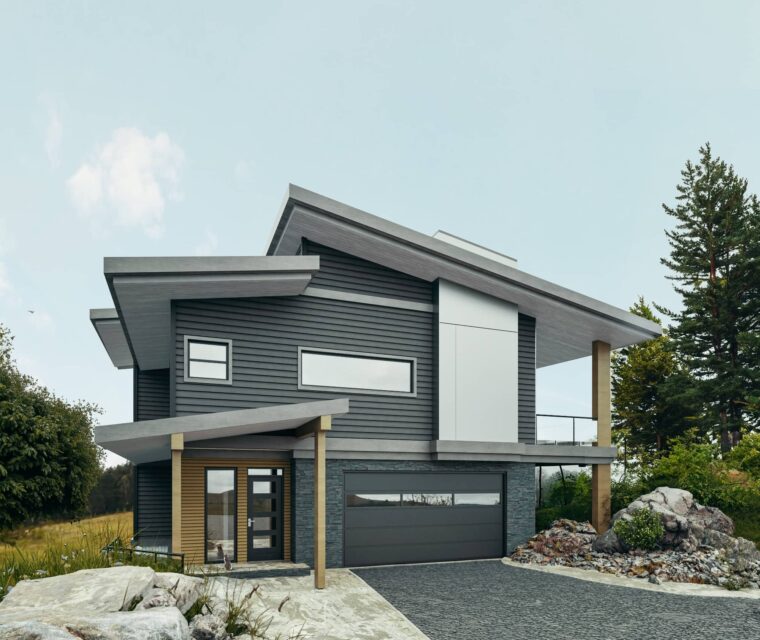
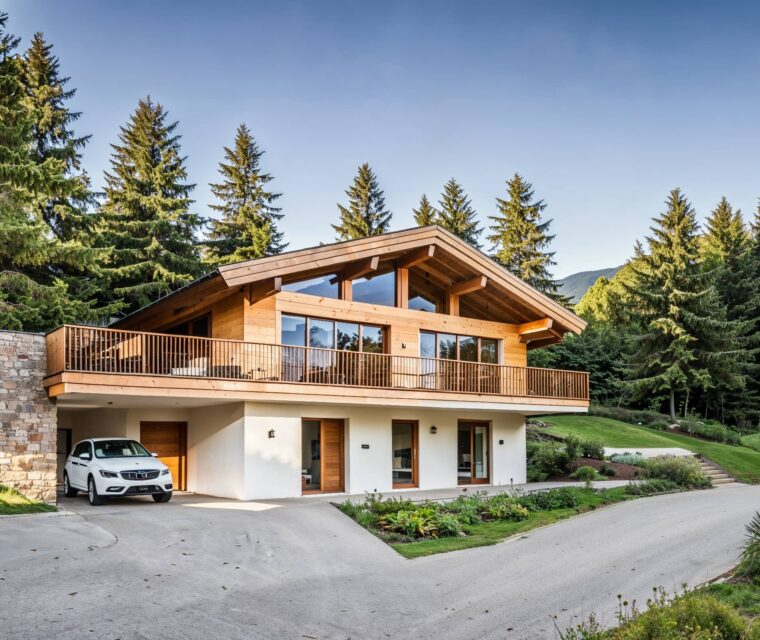
We created a two-story volume with a dynamic roof composition that combines a traditional gable roof with a modern flat element featuring a double-height space (clerestory). The building is elevated on a pier foundation, ensuring minimal intervention in the natural terrain and providing protection against snowdrifts in winter—a critical aspect for a region with severe winters.
The facade design is based on vertical navy blue metal siding with white window trims, creating a striking contrast and emphasizing the clarity of the architectural lines. An asymmetrical composition of window openings ensures optimal natural lighting inside while maintaining the structural integrity of the facade.
A multi-level system of terraces and balconies extends the living space outdoors: the main terrace at the entrance level, a wide second-floor balcony, and a side entrance porch create various points of contact with the natural surroundings.
Key Features
Spatial Maximization through Verticality
The two-story structure with a high double-height ceiling allows for the accommodation of all necessary functions within a compact footprint: a living area, bedroom, bathroom, and technical rooms, all while creating a sense of spaciousness atypical for a tiny house.
Panoramic Glazing with Lake Views
Ribbon windows on the upper level and large vertical windows on the lower floor are oriented toward the water, turning the landscape into part of the interior. White window frames with double glazing provide the thermal insulation necessary for Canadian winters.
Adaptation to Snow Loads
The roof structure is calculated to withstand significant snow loads (up to 200 kg/m²), characteristic of Ontario. The pitch of the main roof allows for natural snow shedding, while the flat section is equipped with reinforced waterproofing and an internal drainage system.
Architectural Details
Vertical metal siding was chosen not only for aesthetic reasons but also for practical considerations: it is resistant to moisture and temperature fluctuations and requires low maintenance. The contrasting snow-white color scheme of the balcony railings and trims reinforces the modern character of the architecture.
The elevated structure on wooden posts serves several functions: it minimizes heat loss from the ground floor, protects against spring flooding, and creates protected storage space beneath the house. Open wooden stairs made of natural pine lead to the main entrance and the side porch.
The dynamic roof composition includes the main gabled volume, an elevated clerestory element with ribbon glazing, and a side canopy over the entrance porch—this multi-layered approach creates an expressive silhouette that stands out against the winter landscape.
Result
A compact yet comfortable residence has been created, successfully combining the philosophy of the tiny house movement with the requirements for year-round housing in Canada’s harsh climate. The house demonstrates how limited square footage can be compensated for by vertical spatial organization, thoughtful landscape integration, and high-quality engineering solutions.
Its location on the lakeshore transforms this object into an ideal country retreat: shielded from city bustle, yet functionally autonomous. The architecture meets modern energy efficiency standards, ensuring comfortable living year-round with minimal operating costs. The project proves that compactness does not mean compromise—it is an opportunity to redefine the essence of housing through the prism of quality rather than quantity.
Looking for a compact country housing solution?
Contact us for consultation about your project.