

Interior design in 2027 is unlikely to be defined by a single “look.” The more meaningful direction is toward spaces that feel lived-in, work harder and remain relevant longer.
That forecast has an evidence base, but it has limits. The 2026 U.S. Houzz Emerging Summer Trends Report documents rising searches for warm color, tactile finishes, wellness and nature-connected design among Houzz users. The American Society of Interior Designers describes a design market shaped by individuality, flexible living, technology and value. NKBA research highlights practical kitchens, tailored bathrooms and wellness-led planning.
What is evidence, and what is a prediction? Search increases and designer survey results below refer to 2026 or earlier data and their stated populations. The 2027 outlooks are Smadych Architects' interpretation of those signals, not verified future statistics. They also do not replace a project-specific brief, local regulations or cost analysis.
The key idea: choose a room's layout, lighting, function and durable materials first; use trends to add character, not to dictate every decision.
Here are ten interior design trends to watch for 2027, with concrete ways homeowners and design teams can apply them.
Warm Earth Tones Will Become Richer and More Expressive
Warm neutral interiors are not disappearing in 2027, but the palette is becoming less predictable. Beige-on-beige can feel flat when every wall, sofa and finish has the same value. A more persuasive direction combines a grounded base with deliberate depth: tobacco, chocolate, burnt orange, oxblood, moss, olive or a cooler counterpoint.
The measurable signal comes from the United States in 2026. Houzz reported increases in searches for rust colors (+178%) and chocolate brown (+153%), along with interest in sage, mushroom, taupe and cream. Its later fall report described warmth as a foundation of many current home interiors rather than a short-lived accent.
How to use it: start with the room's daylight, timber and flooring. Choose one warm background, one darker anchoring material and one contrasting color that has a real reason to be there. A rich palette works better when the light, proportions and materials are considered together.
2027 forecast: layered earthy color stories will continue, but expect more contrast and individual combinations instead of a universal neutral formula.
Research context: Houzz Research, 2026 U.S. Emerging Summer Trends →
Tactile Walls and Honest Materials Will Matter More Than Perfect Surfaces
In a world of polished digital imagery, material depth has become a differentiator. Textured plaster, limewash, timber grain, terracotta, handmade tile and stone with visible variation bring shadow and visual complexity into a room even when the layout is restrained.
Houzz recorded significant US search growth in 2026 for sandstone (+257%), linen wallpaper (+104%), Venetian plaster (+94%), terracotta flooring (+55%) and limewash interior paint (+53%). These numbers describe activity on Houzz, not overall Google search volume or guaranteed 2027 purchases.
What matters in practice: choose finishes for their maintenance needs, durability, repairability and the way they react to natural and artificial light. A heavily textured finish behind a kitchen worktop has different requirements from the same finish in a quiet bedroom. A sample under the actual room lighting tells more than an online render.
2027 forecast: natural variation and surfaces that look convincing up close will remain influential, provided function is not sacrificed for texture.
Research context: Houzz Research, 2026 U.S. Emerging Summer Trends →
Collected Interiors Will Replace the “Everything Bought at Once” Look
Not every room needs to follow a single furniture collection. A vintage chair, contemporary table, inherited object or carefully chosen artwork can sit together when the composition has a coherent scale, palette and rhythm.
In its 2026 fall report, Houzz described a shift toward layered rooms with personal history rather than showroom-style uniformity. ASID's 2026 outlook similarly highlighted a return of expressive, individual design, even while noting that clients remain sensitive to cost and long-term value.
How to use it: keep major built-in elements calm, then allow selected pieces to tell the story. Mix periods with an intentional common thread, such as wood tone or silhouette. Avoid filling every surface: negative space gives meaningful objects room to register.
2027 forecast: distinctive spaces with recognizable personal character will be more compelling than imitations of a single viral interior.
Research context: Houzz Research, 2026 U.S. Fall Design Trends →
Craft, Reuse and Adaptive Interiors Will Influence Material Choices
Reusing a well-made cabinet, restoring a staircase, keeping original masonry or introducing reclaimed timber can preserve character and avoid unnecessary replacement. It can also turn practical constraints into design opportunities.
Houzz's 2026 US emerging-trends report found searches for repurposed materials had almost tripled; its fall report identified handcrafted tile, aged metal and original architectural features as part of a growing preference for authenticity. Those signals do not mean every reused material is automatically low-impact: transport, refinishing and service life still matter.
Our Pole Dance Studio Design in Milan provides a concrete example of designing a modern functional interior while seeking to preserve existing historic character. The project description emphasizes the original brickwork, historic window openings, careful insertion of new elements and a lighting strategy shaped around the space.
2027 forecast: preservation and contemporary intervention will increasingly be treated as a design language, not just a sustainability checklist.
Research context: Houzz Research, 2026 U.S. Fall Design Trends →
Real interior project · Milan, Italy
Designing Inside a Historic Shell
Explore the studio’s documented approach to combining new functions with existing architectural character in Milan.
View the interior project →Wellness Will Be Designed Through Light, Air, Privacy and Acoustics
A beautiful room can still be difficult to live in if it is noisy, poorly lit, overheated or impossible to keep private. Wellness-oriented interiors start with ordinary daily conditions: daylight, glare control, ventilation, task lighting, acoustics, easy circulation and access to quieter areas.
In the 2026 US Houzz report, searches for wellness room increased 164% and biophilic design increased 112%. NKBA's 2026 industry presentation pointed to lighting quality, air flow, stress reduction and individual routines as design priorities across the home. These findings show interest, not evidence that any particular material or room feature produces a health outcome.
How to use it: combine layered lighting with dimmable controls, specify sensible glare and privacy solutions, and address the noise of appliances and circulation routes before selecting decorative finishes.
2027 forecast: wellness will be less about adding one dedicated spa room and more about making every room easier to inhabit.
Research context: NKBA, 2026 Kitchen & Bath Trends: The Themes Shaping the Future of the Home →
Kitchens Will Be Planned Around Real Routines, Not Just a Statement Island
The kitchen is increasingly a social space, a working zone and a storage system at the same time. The strongest 2027 kitchen concepts are likely to start with how people cook, eat, entertain, clean and move through the house, then decide which visual features make sense.
NKBA's 2026 kitchen report, based on its surveyed industry professionals, found interest in functional enhancements, smarter storage, integrated appliances and better lighting. The association reported that 76% of respondents expected the kitchen footprint to grow over the next three years, although that is a professional expectation, not a measurement of completed 2027 kitchens.
In Smadych's Kitchen Renovation in Austria, the documented design approach reorganizes separated rooms into an open kitchen, dining and living area while improving circulation, natural light and storage. It illustrates why spatial planning should come before selecting a fashionable cabinet finish.
2027 forecast: kitchens will feel more integrated with the home, while concealed utility, purposeful lighting and adaptable storage support real daily use.
Research context: NKBA, 2026 Kitchen Design Trends →
Real interior project · Vienna, Austria
Kitchen Renovation in Austria
See how circulation, daylight, storage and connected living spaces informed this kitchen-centered renovation.
View the kitchen project →Bathrooms Will Blend Spa Atmosphere With Practical Accessibility
Spa-inspired bathrooms are most convincing when they work exceptionally well as bathrooms. A generous shower, well-planned storage, slip-conscious materials, lighting at different times of day and easy access often matter more than a long list of smart devices.
NKBA's 2026 bath research points toward wellness, larger showers, universal design and storage tailored to personal routines. Its industry presentation describes features such as integrated seating, natural light and accessible layouts alongside the move toward more personalized bathrooms.
How to use it: ask whether a feature helps with comfort, cleaning, water efficiency or accessibility. A curbless shower must still be designed with appropriate waterproofing and drainage; lighting should support both safe tasks and lower-intensity evening use.
2027 forecast: the enduring spa bathroom will combine calm materials with invisible functional details rather than relying entirely on luxury fittings.
Research context: NKBA, 2026 Kitchen & Bath Trends: The Themes Shaping the Future of the Home →
Flexible Rooms and Storage Will Support Homes That Change
A home office may become a nursery, guest room or accessible bedroom. A spare corner may need to switch between homework, exercise and quiet reading. Interiors that depend on fixed single-use furniture can become expensive to adapt.
ASID's 2026 outlook highlighted changing living arrangements and aging-in-place needs; Houzz's fall 2026 report cited research indicating that 61% of renovating homeowners planned to stay in their homes for eleven years or longer. These findings support thinking about long-term use, but individual households still have very different priorities.
How to use it: locate outlets and task lights for more than one furniture arrangement, plan storage by activity, allow clear circulation and favor adaptable furniture where it performs as well as built-in elements.
2027 forecast: flexible planning will become a stronger part of the interior brief, especially in compact homes and multigenerational households.
Quiet, Useful Technology Will Replace Gadget-Heavy Interiors
Smart-home features should make the space easier to use rather than more complicated. Automated shading, scene-based lighting, discreet charging, practical appliance controls and energy-aware systems can contribute when they have straightforward manual overrides and a plan for long-term maintenance.
NKBA's 2026 research discusses connected appliances and integrated lighting as growing kitchen directions. ASID also cautions that increased technology brings energy-demand and infrastructure trade-offs. The useful design response is not to install everything: it is to specify systems that meet actual needs and remain understandable to future occupants.
How to use it: decide control locations during design, keep wiring and service access documented, avoid unnecessary proprietary dependencies and prioritize daylight and good basic lighting before adding automation.
2027 forecast: technology will become more visually discreet, but successful interiors will still be defined by usability and maintainability.
Biophilic Spaces Will Connect Interior Design With the Outdoors
Biophilic design works best when it connects real spatial decisions: what a window frames, how daylight moves, where a plant can actually thrive and whether a terrace or garden feels like an extension of the living room.
Houzz's 2026 search figures suggest strong US interest in nature-connected interiors. The design opportunity is broader than adding decorative houseplants; it includes sightlines, natural materials, ventilation strategies, shade and the transition from interior circulation to outdoor living areas.
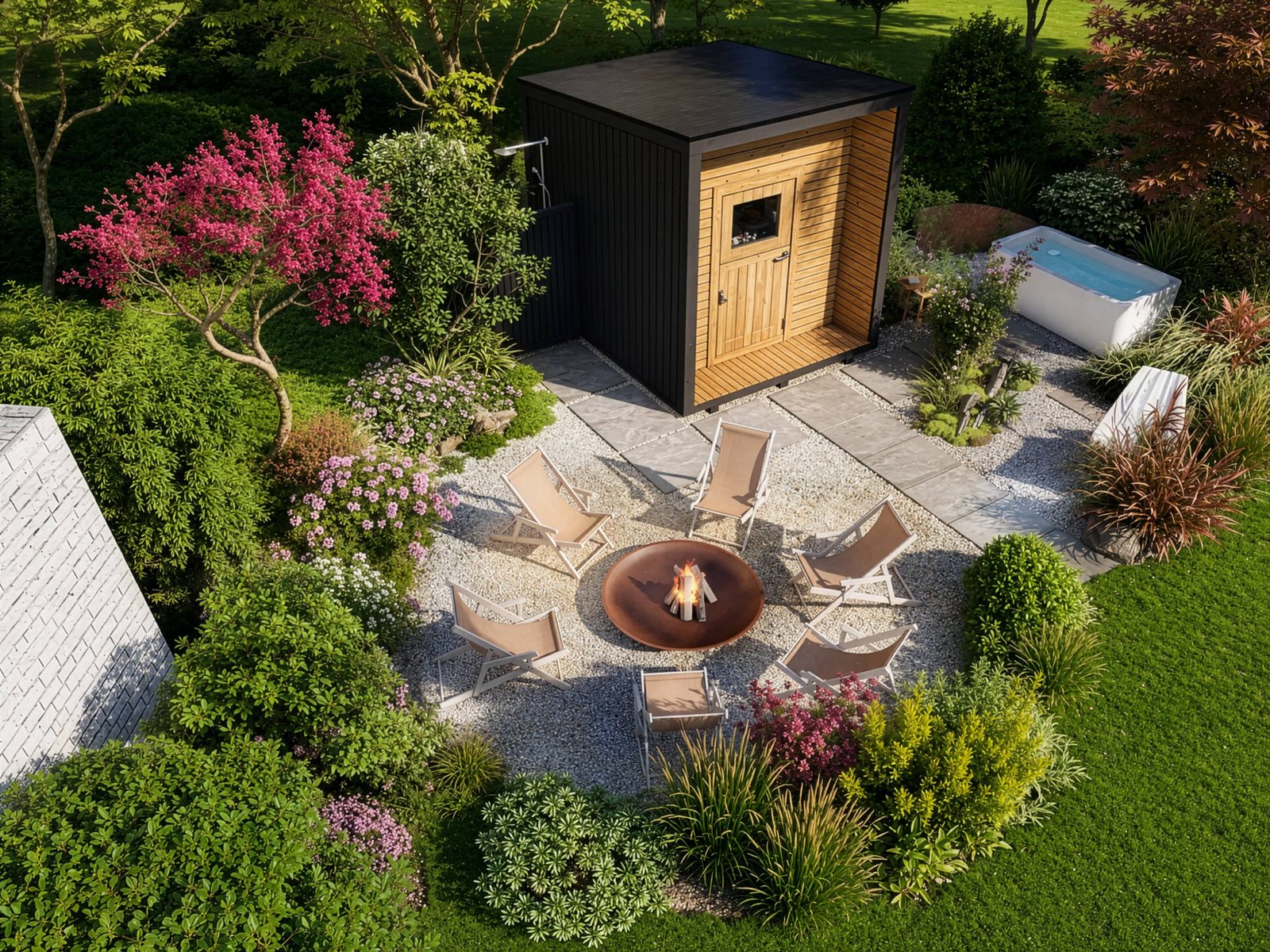
Smadych's Japanese-Inspired Sauna Garden in New York illustrates the outdoor side of that relationship: a carefully zoned retreat using planting, natural materials and wellness spaces. It is an outdoor project example, not a claim that the image depicts a completed interior.
2027 forecast: interiors will increasingly be planned together with window views, landscape and adjacent outdoor rooms instead of treating them as separate design packages.
Research context: Houzz Research, 2026 U.S. Emerging Summer Trends →
How to Apply 2027 Interior Trends Without Building a Short-Lived Room
A prediction becomes useful only when it leads to better choices. Before replacing cabinetry or selecting a dramatic paint color, establish the room's constraints and the people who will use it.
- Map routines: list daily tasks, circulation, storage and competing activities.
- Test light: review color and material samples in morning, afternoon and artificial light.
- Separate permanent from changeable: keep durable flooring, joinery and services practical; experiment with color or textiles where replacement is inexpensive.
- Compare lifecycle: consider repairability, cleaning, availability and maintenance rather than choosing materials by appearance alone.
- Check technical details: ventilation, drainage, accessibility and electrical work require proper local expertise and documentation.
For project planning, see Smadych's interior design and visualization services and explore real interior design projects, including residential and specialist commercial work.
What Will Define Interior Design in 2027?
Our forecast is not that every home will become colorful, curved or heavily textured. The strongest common thread is greater intention: more thought about the people living in the space, the lifetime of materials, adaptable planning and the relationship between design and everyday experience.
| 2027 direction | Evidence visible in 2026 | Practical design response |
|---|---|---|
| Warm color | Houzz searches for rust and chocolate brown increased | Ground the palette in light, flooring and meaningful contrast |
| Tactile materials | Growing Houzz interest in plaster, sandstone and natural finishes | Specify texture with maintenance and durability in mind |
| Personal interiors | ASID and Houzz describe individual expression and layered rooms | Mix personal objects and enduring pieces with visual restraint |
| Wellness | Interest in wellness rooms and biophilic design increased on Houzz | Plan light, acoustics, comfort and privacy throughout the home |
| Kitchen & bath | NKBA professional research emphasizes routines, storage and accessibility | Design workflow and service access before decorative finishes |
| Flexibility | ASID and Houzz report long-term, adaptable living priorities | Allow rooms and furniture to serve more than one future use |
Smadych Architects approaches interior projects through spatial planning, visualizations, drawings and an understanding of the wider architectural context. Browse our interior portfolio, or explore the wider architectural outlook in Architecture Trends 2027 and Architecture Trends 2026.